

Author: Site Editor Publish Time: 2026-10-20 Origin: Site
Choosing between SJTW and SJOOW extension cords depends on the working environment, oil exposure, and electrical requirements. Both are junior hard-service flexible cords designed for portable power applications, but they differ in insulation and jacket materials and their resistance to oil.
This guide explains the differences between SJTW vs SJOOW extension cords, compares their key properties, and helps you select the right cord for residential, outdoor, and industrial applications.

The letters in SJTW and SJOOW identify the cord's service classification and key construction or performance characteristics.
S: Service cord, indicating a hard-service cord classification.
J: Junior hard service, typically indicating a 300 V rating.
T: Thermoplastic insulation and jacket.
OO: Oil-resistant insulation and jacket.
W: Suitable for wet locations and sunlight exposure under applicable requirements.
The key distinction is that SJTW uses thermoplastic insulation and a thermoplastic jacket, while SJOOW has oil-resistant insulation and an oil-resistant jacket.
An SJTW extension cord is a junior hard-service flexible cord with thermoplastic insulation and a thermoplastic outer jacket. It is commonly used for portable electrical equipment and general-purpose extension cords.
Thermoplastic construction: Both the conductor insulation and outer jacket use thermoplastic materials.
Weather resistance: The “W” designation indicates suitability for wet locations and outdoor exposure when used within the product's ratings.
Flexible construction: Stranded conductors allow the cord to bend and move during normal use.
General-purpose applications: SJTW cords are commonly used with household appliances, garden equipment, portable lighting, and general-purpose power tools.
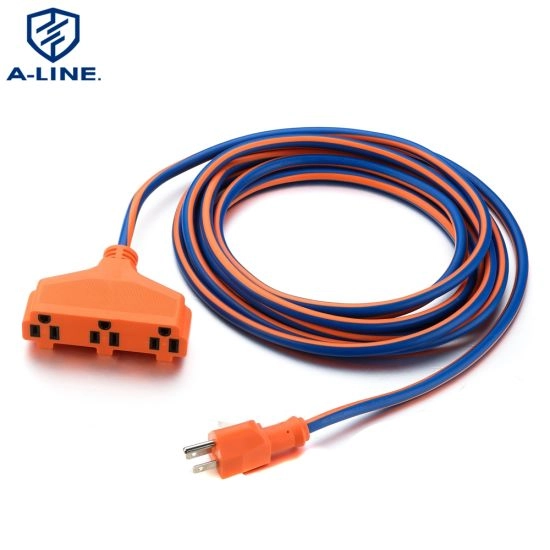
Outdoor Heavy Duty Extension Cord 10/3 AWG SJTW
SJTW extension cords are suitable for many applications that require flexible, weather-resistant power connections, including:
Household appliances and portable electrical equipment
Lawn and garden equipment
General-purpose power tools
Temporary outdoor power supplies
Portable lighting and maintenance equipment
SJTW is a practical choice when the application requires weather resistance but does not require the specific oil resistance provided by an oil-resistant cord construction.
However, outdoor suitability does not mean a cord is suitable for every environmental condition. Check the product's temperature rating, voltage rating, and applicable outdoor-use markings before installation or use.
An SJOOW extension cord is a junior hard-service flexible cord with oil-resistant insulation and an oil-resistant outer jacket. It is also designed for use in wet locations and outdoor environments when the product is appropriately rated.
SJOOW cords are commonly used in industrial equipment, machinery, and other applications where exposure to oils or lubricants is a concern.
Oil-resistant insulation and jacket: The “OO” designation indicates that both the conductor insulation and outer jacket meet the applicable oil-resistance requirements.
Weather resistance: The “W” designation indicates suitability for wet locations and sunlight exposure under the applicable product requirements.
Flexible construction: Stranded conductors and flexible insulation and jacket materials support portable equipment applications.
Industrial suitability: SJOOW cords are commonly used with heavy-duty portable tools, industrial machinery, and equipment requiring oil resistance.
SJOOW cords often use thermoset rubber insulation, such as EPDM, and a flexible jacket material such as CPE. However, actual materials and performance ratings vary by manufacturer and product design.
SJOOW extension cords are commonly selected for applications such as:
Factory and workshop equipment
Industrial machinery and portable tools
Equipment exposed to oils or lubricants
Portable lighting in industrial environments
Maintenance and service equipment
Outdoor industrial power connections
SJOOW is particularly useful when both weather resistance and oil resistance are required. It is not automatically suitable for every chemical, fuel, solvent, or industrial fluid. Compatibility must be confirmed against the actual substances and exposure conditions.
The main difference between SJTW and SJOOW extension cords is their insulation and jacket construction, particularly their specified resistance to oil.
Comparison Factor | SJTW | SJOOW |
|---|---|---|
Cord classification | Junior hard service | Junior hard service |
Insulation material | Thermoplastic | Oil-resistant material; often thermoset rubber |
Outer jacket | Thermoplastic | Oil-resistant material; often flexible CPE |
Oil resistance | Not specified by the SJTW designation | Both insulation and jacket are oil resistant |
Wet-location suitability | Yes, when properly rated | Yes, when properly rated |
Outdoor suitability | Yes, when properly rated | Yes, when properly rated |
Typical applications | General-purpose extension cords, garden equipment, portable tools | Industrial equipment, machinery, and oil-exposed applications |
Key selection factor | General-purpose use and environmental ratings | Oil exposure plus environmental and electrical requirements |
The right extension cord depends on the working environment, potential oil exposure, and electrical requirements.
General-purpose use: Choose SJTW for typical household and outdoor applications where oil resistance is not required.
Oil exposure: Choose SJOOW when the cord may come into contact with compatible oils or lubricants.
Harsh environments: Check the manufacturer's specifications for applications involving extreme temperatures, chemicals, or heavy mechanical wear.
Beyond cord type, consider these factors before making a final selection:
Conductor Size: Match the wire gauge to the equipment's current requirements.
Cord Length: Consider voltage drop over longer runs, especially with high-current equipment.
Temperature Rating: Ensure the cord is rated for the expected operating temperature.
Certifications: Verify the applicable standards and approvals for your target market, such as UL or CSA requirements where relevant.
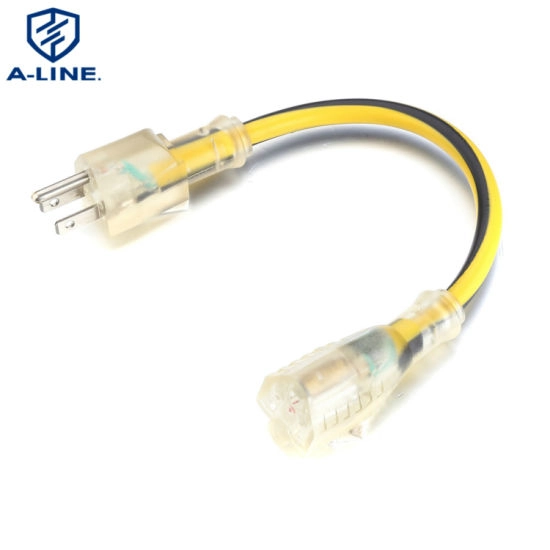
Outdoor Use SJTW power extension Cord
Not always. Although both are junior hard-service flexible cords, their material properties and environmental ratings may differ. Before substituting one for the other, verify the cord's electrical ratings, oil resistance, and suitability for the intended application.
SJOOW may be suitable for outdoor applications when the specific product is rated for the intended conditions. However, outdoor suitability does not automatically mean it is approved for permanent installation, continuous immersion, or every type of weather exposure. Always follow the manufacturer's instructions and applicable electrical codes.
Not necessarily. Oil resistance does not guarantee compatibility with gasoline, solvents, fuels, or other chemicals. Check the manufacturer's chemical compatibility data before using the cord in environments where these substances may be present.
For a custom extension cord, specify the required cord type, conductor size, length, voltage and current ratings, plug and connector types, operating environment, and target-market certification requirements. These details help the manufacturer identify a suitable construction for your application.
Start by identifying the equipment's electrical requirements and the environmental conditions in which the cord will operate. Then verify the cord type, conductor size, length, temperature rating, and applicable certifications against the manufacturer's specifications.
When comparing SJTW vs SJOOW extension cords, SJTW is suitable for general-purpose applications, while SJOOW is the better choice when oil resistance is required. Always verify the cord's electrical ratings and environmental suitability before making a selection.
Looking for reliable extension cords or custom cable solutions? Contact A-Line Cable to discuss your product requirements and find a solution tailored to your application.